NSW LearnerNSW DKT practice
Get NSW Learner free

Practise for the NSW driver knowledge test

General Knowledge

Registration, roadworthiness and towing in NSW

In the test. These general knowledge questions are practical ones: a lapsed rego, a bald spare, a borrowed car with a defect notice or a trailer to hitch up. Each asks what is legal, or what you should check first.

Quick answer

What does a car need to be legal to drive in NSW?

It must be registered, which requires a green slip: compulsory third party insurance that covers injuries to people. Most light vehicles over five years old also need a pink slip safety inspection before renewal. The car must be roadworthy as well, with working lights, indicators, horn, wipers and brakes, and at least 1.5 mm of tread on every tyre, the spare included.

The short version

  • No rego means no green slip injury cover, so an unregistered car stays parked
  • Cars over five years old usually need a pink slip before renewal
  • Every tyre, spare too, needs 1.5 mm of tread or more
  • Tow a single trailer, within the lower of the car and tow bar limits
  • Over 7.5 metres with a trailer? Hold 60 metres behind long vehicles in the country

Registration, green slips and pink slips

Before anything else, a car needs current registration, and that rests on two pieces of paper.

  • A car must be registered before it goes on a road, and there is no grace period once the rego expires.
  • The green slip is compulsory third party insurance. It pays for injuries to people, not dents in cars, so property damage needs separate cover.
  • Drive an unregistered car and there is no compulsory injury cover, so you could be personally liable for anyone you hurt.
  • Most light vehicles more than five years old need a pink slip safety inspection before rego can be renewed. A three year old car usually does not.
  • Failed the inspection and the rego has since lapsed? The car stays off the road until it is repaired, passed and registered.

Forgot to renew? Even a short run to the shops in an unregistered car means driving with no compulsory injury cover.
Number plates and defect notices

Two things can make an otherwise sound car illegal to drive.

  • Number plates must stay clean and readable, so wipe the mud off after a dirt road trip.
  • A bike rack or tow bar must not hide a plate. If one does, fit a plate to the rack.
  • A defect notice restricts a car until the fault is fixed and cleared, and that applies to any driver.
  • Borrowing a car? Ask whether it has a defect notice, and read exactly what it allows before you take it out.

Keeping the car roadworthy

Roadworthy means every safety part of the car does its job.

  • Every light and indicator, plus the horn, wipers and brakes, has to be working. A single blown brake light is enough to make the car unroadworthy.
  • Each tyre, spare included, needs at least 1.5 mm of tread with no cuts or bulges.
  • Set tyre pressures to the figure on the maker's placard, not the maximum printed on the tyre wall.
  • Heavy load or long fast trip ahead? Many makers list a higher loaded pressure, best checked with the tyres cold.
  • Soft tyres drag on the road and burn more fuel. Gentle acceleration and steady speeds save fuel and cut emissions too.
  • With ABS, brake hard and hold the pedal down in an emergency. A pulsing pedal is normal, so do not pump it.

Wipers that quit in a dry spell still leave the car unroadworthy. Get them fixed before the rain arrives.

Loads and towing limits

A load or a trailer changes what the car can safely carry, and the rules set firm limits.

  • Tie down every load, from tools in a ute tray to a mattress on the roof racks, so it cannot shift or fall.
  • Tow one trailer at a time, never two together.
  • Keep under the car maker's towing limit and under the tow bar's rating as well. Where they differ, the lower figure is your limit.
  • The trailer needs its own registration, working lights and its safety chains connected.
  • Nobody rides in a trailer or caravan while it is towed, not even to steady the load.
  • Learners may not tow at all. On red Ps, the most you can tow is a trailer of 250 kg unloaded.

Driving with a trailer behind you

Once hitched up you are steering something longer and heavier, and it handles that way.

  • Expect longer stopping distances and leave more room ahead.
  • A trailer cuts inside the car's path on corners, so slow down and take turns wider to keep its wheels off the kerb.
  • If the car and trailer together measure more than 7.5 metres, you count as a long vehicle.
  • On country roads, keep at least 60 metres behind another long vehicle so overtaking traffic can pass one of you at a time.
  • When a queue builds behind you, pull over where it is safe and let it through.

Try this

Worked examples to think through

Picture the situation, decide what you would do, then open the answer.

1Try this

You borrow a mate's car for the weekend and spot that the spare in the boot is close to bald. Does it matter if the other four tyres are fine?

Show the answer

It does. The 1.5 mm minimum tread covers every tyre on the car, the spare as well, so swap in a legal spare before you count on it.

2Try this

Towing a caravan on a two-lane country highway, you are stuck behind a slow truck and cars are lining up behind you. What should you do?

Show the answer

Fall back to at least 60 metres behind the truck so faster vehicles have room to pass one of you at a time, and pull over somewhere safe to let the line go by (rule 127).

Practise it

Three registration, roadworthiness and towing questions to try

Real questions from the 40 in the NSW Learner bank for this topic, three options each like the test. Pick one to see the answer, the reason and the rule.

Question 1 of 3 General Knowledge

You back into a parked car and dent it, and your only insurance is the green slip. What will the green slip pay for the dent?

Right.Not quite. The answer is A.

A green slip covers people who are injured, so damage to cars needs separate property insurance.

Source: Motor Accident Injuries Act 2017 (NSW)

Question 2 of 3 General Knowledge

Your car's handbook says it can tow 1600 kg but your tow bar is rated at 1200 kg. What is the most you may tow?

Right.Not quite. The answer is B.

You must stay within both the car maker's towing limit and the tow bar's rating, so the lower figure applies.

Source: Road Transport (Vehicle Registration) Regulation 2017 (NSW)

Question 3 of 3 General Knowledge

Your car and caravan together are 10 m long. On a two-lane country road behind a truck, how far back must you stay?

Right.Not quite. The answer is A.

Towing makes you a long vehicle, which must keep at least 60 m behind another long vehicle outside built-up areas.

Source: Road Rules 2014 (NSW) rule 127

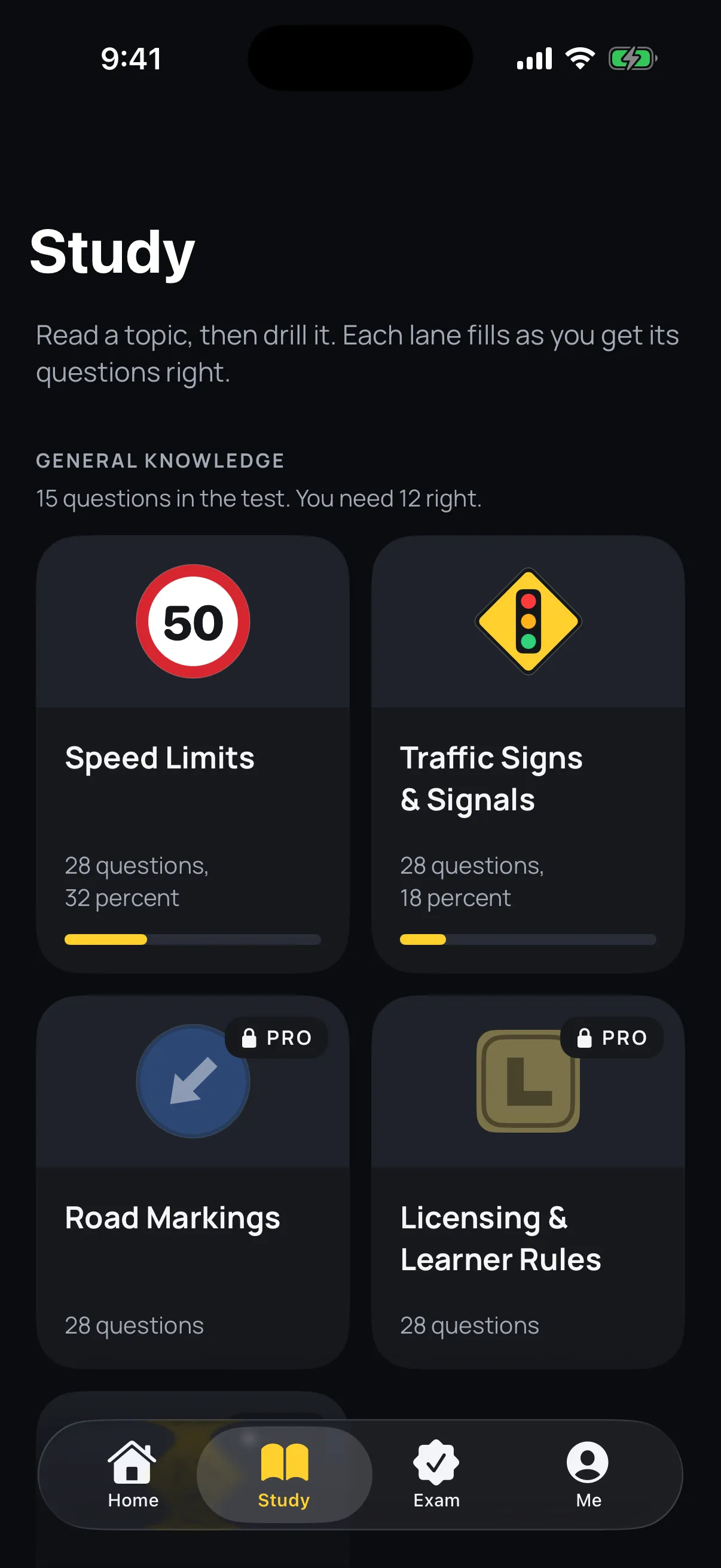
The NSW Learner Study tab with topic tiles, each with its drawn sign and a lane showing progress

Practise this topic in the app

Drill registration, roadworthiness and towing until it is automatic

In NSW Learner this topic has its own lesson and a drill of 40 questions. Questions you miss come back sooner, the lane on the tile fills as you get them right, and the mock exam mixes it in with everything else in the test's layout.

Common questions

What is the difference between a green slip and a pink slip?
A green slip is compulsory third party insurance, needed to register a car, and it covers injuries to people. A pink slip is the safety inspection most light vehicles over five years old need before rego renewal.
Does a spare tyre need legal tread in NSW?
Yes. The spare must have at least 1.5 mm of tread and no damage, the same as the four tyres on the car.
Can learners tow a trailer in NSW?
No, towing is off limits on Ls. Once on P1 you may tow a trailer weighing 250 kg or less unloaded.
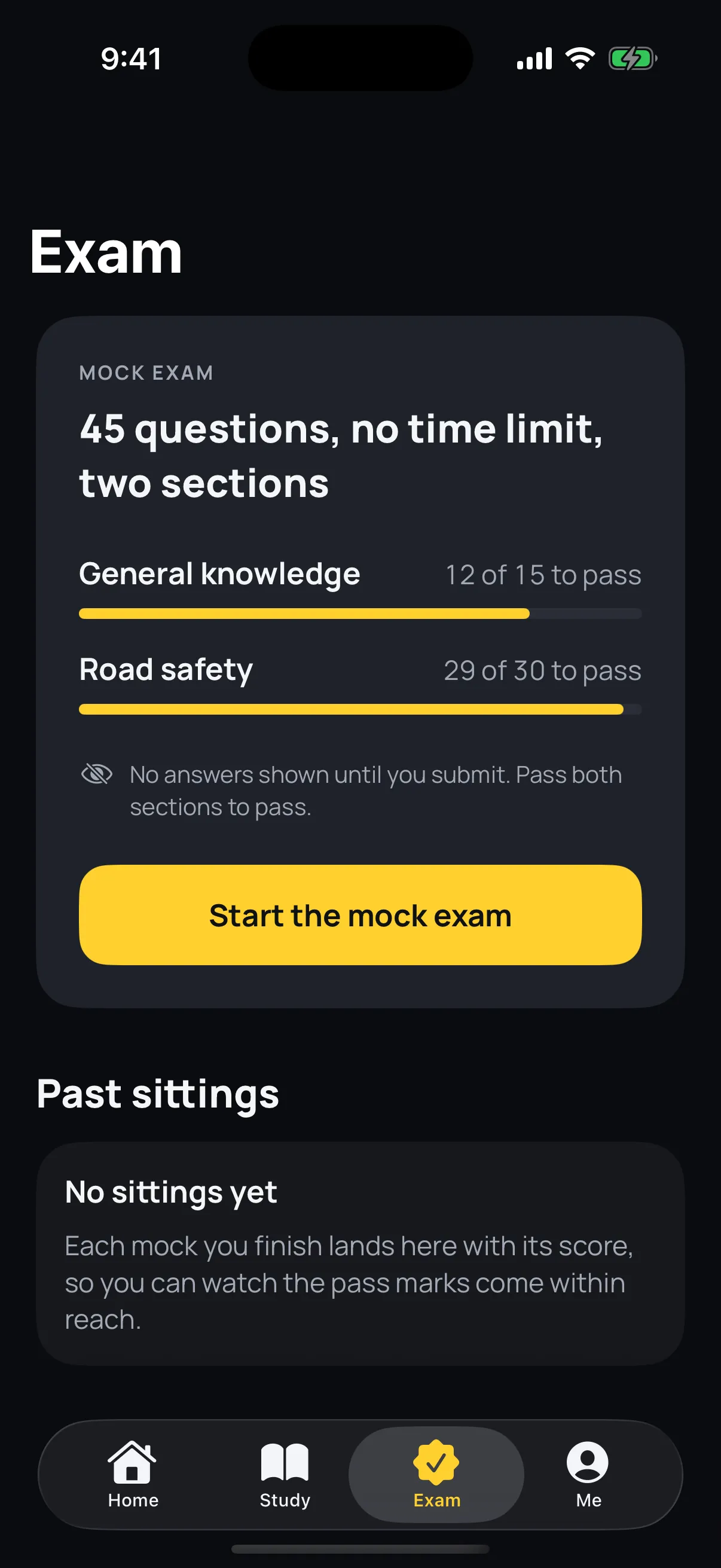
NSW Learner mock exam screen: 45 questions, no time limit, two sections with their pass marks
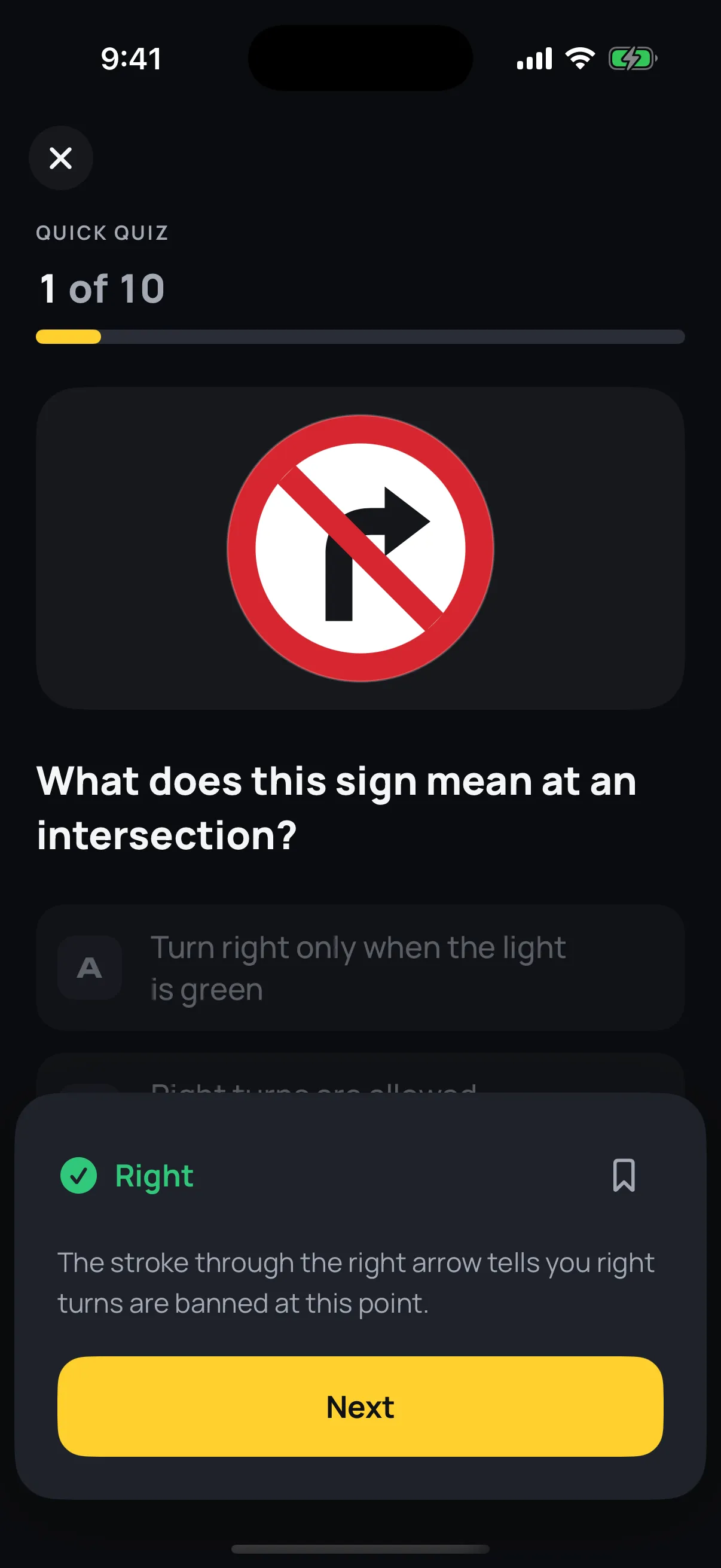
A practice question in NSW Learner answered correctly, with the explanation card
LP

Your L plate turns green when you would pass

NSW Learner is also an iPhone app, built on the same lessons and questions as this site. Short lessons for every topic, drills that bring back what you got wrong, and a mock exam in the test's layout, in your pocket and working without a signal.

  • Free in the app: one full mock exam, and the speed limits and traffic signs and signals topics with their lessons, drills and 179 questions
  • Private the app needs no account, works offline and keeps your progress on your phone
  • Pro comes two ways, each bought separately. NSW Learner Pro on this website is A$14.99 one-time and works in any browser you sign in on. The app has its own Pro, bought inside the app through Apple. One does not unlock the other.

Independent study app. Not affiliated with Transport for NSW or Service NSW.