NSW LearnerNSW DKT practice
Get NSW Learner free

Practise for the NSW driver knowledge test

General Knowledge

Learner driver speed limits in NSW

In the test. Expect speed questions in the general knowledge part of the DKT, usually as short scenarios: a street with no sign, a school zone on a public holiday, roadworks with nobody working, or an ambulance stopped ahead.

50

Quick answer

What is the speed limit for a learner driver in NSW?

A learner driver in NSW may never go faster than 90 km/h, even on a motorway signed 100 or 110. Where the sign shows less than 90, the sign is your limit. Red P1 drivers share the same 90 km/h cap, and green P2 drivers top out at 100 km/h. With no sign at all, streets in built-up areas default to 50 km/h and other roads to 100 km/h.

The short version

  • Unsigned roads: 50 km/h where buildings line the street, 100 km/h elsewhere
  • School zones run at 40 km/h during signed times, on school days only
  • L plates and red P plates are capped at 90 km/h, green P plates at 100 km/h
  • Drop to 40 km/h past a stopped emergency vehicle on roads signed 80 or less
  • Leave three seconds to the car ahead, four or more on wet roads

Default limits and signed limits

Plenty of NSW streets have no speed sign at all, and the road rules fill that gap with two default numbers.

  • In a built-up area, with houses, shops or street lights lining the road, the limit is 50 km/h.
  • Outside built-up areas, on an unsigned road, the limit is 100 km/h.
  • A number inside a red circle is your maximum until another sign changes it.
  • An AREA sign, such as 40 AREA, sets one limit for every street inside the area until you pass the end sign.
  • A blue LOCAL TRAFFIC AREA sign with 40 (ZONE on older signs) works like an area limit. Bike riders, walkers and children use those streets too, so look out closely.
  • Roadwork and electronic speed signs are real limits, even when no workers are in sight. Break a roadwork limit and you get a fine plus demerit points, as for any speeding.

Buildings beside the road and no sign in view is a classic DKT trap. The answer is 50 km/h, not 60.
School zones and shared zones

Two kinds of zone carry their own lower limits, and the test checks exactly when they apply.

  • Inside a school zone, keep to 40 km/h while the times printed on the sign are running.
  • The usual windows are a morning one, 8 am to 9:30 am, and an afternoon one, 2:30 pm to 4 pm. A few zones differ, so read each sign.
  • The limit only runs on school days. Weekends, public holidays and school holidays are excluded.
  • Flashing lights on the sign are only a reminder: the 40 holds during the signed times whether they flash or not. Past the END SCHOOL ZONE sign, the road's usual limit is back.
  • A shared zone uses the number on its sign, usually 10 km/h, and anyone walking there has priority over you.

A weekday public holiday is not a school day, so the 40 km/h limit is off even during the usual hours.

Speed limits on L plates and P plates

Your licence stage sets a personal ceiling that sits on top of every speed sign you pass.

  • Learner, on L plates: 90 km/h maximum.
  • P1, the red P: 90 km/h maximum.
  • P2, the green P: 100 km/h maximum, even on a 110 km/h motorway.
  • When the posted limit is lower than your cap, the lower number wins. A learner on an 80 km/h road drives at 80 or less.
  • Get caught speeding once as a learner or P1 driver and the demerit points alone are enough to suspend you.

Slowing down for stopped emergency vehicles

NSW has a slow down and move over rule for vehicles stopped at the roadside with their lights flashing.

  • It covers police, ambulance and fire vehicles with blue or red lights, plus tow trucks and breakdown vans flashing yellow.
  • On roads signed 80 km/h or less, drop to 40 km/h or under while you go past.
  • Where the limit is above 80 km/h, slow to a safe speed, give the vehicle a wide berth and leave the nearest lane when you safely can.
  • Watch for people on foot around the vehicle and give way to them.

Speed, conditions and following distance

A speed limit is the most you may do on a good day, and many DKT questions ask when less is right.

  • Heavy rain, poor light, or parked cars with children playing nearby all call for driving well under the sign. Even a light shower leaves the surface slippery enough to ease off.
  • Overtaking gives you no extra allowance. If you cannot pass without speeding, stay behind.
  • Your speed is your call, made from the sign and the conditions. Matching faster traffic or giving in to a passenger who wants you to hurry is never a reason to go quicker.
  • Stopping distance climbs faster than speed does, so a few extra km/h cost you many metres.
  • The law asks for enough room to stop safely behind the car ahead, without naming a number.
  • Aim for three seconds or more in good conditions and four seconds or more in the wet or after dark.
  • A bend warning with a number beneath it gives the advised speed for taking that curve.

Try this

Worked examples to think through

Picture the situation, decide what you would do, then open the answer.

1Try this

At 8:45 on a Tuesday morning in term, you drive past a 40 school zone sign with its lights dark. Everyone around you is still doing 60. What speed is right?

Show the answer

40 km/h. On a school day the limit runs for the hours on the sign whether or not the lights flash, and the speed of other cars does not change that (rule 23).

2Try this

On your red P1 licence you merge onto a quiet, dry motorway signed 110 km/h. What is your top speed?

Show the answer

90 km/h. Where your licence cap sits below the sign, the cap applies, and a P1 driver caught speeding at all loses the licence to suspension.

Practise it

Three speed limits questions to try

Real questions from the 69 in the NSW Learner bank for this topic, three options each like the test. Pick one to see the answer, the reason and the rule.

Question 1 of 3 General Knowledge

SCHOOLZONE40

You pass this sign during the hours it shows. What is the most you may drive?

Right.Not quite. The answer is C.

Inside a school zone you keep to the number on the school zone sign, which in NSW is 40 km/h while the zone is active.

Source: Road Rules 2014 (NSW) rule 23

Question 2 of 3 General Knowledge

40

You drive into roadworks with a 40 km/h sign, but no workers are in sight. What is the limit?

Right.Not quite. The answer is A.

A roadwork speed sign sets the limit for that stretch whether or not people are working, because the road itself may be rough, narrow or changed.

Source: Road Rules 2014 (NSW) rule 21

Question 3 of 3 General Knowledge

On a 110 km/h motorway, a police car is stopped on the shoulder with lights flashing. What does the law require as you pass?

Right.Not quite. The answer is C.

Above 80 km/h the rule asks for a reasonable speed, a safe gap and, on a multi-lane road, leaving the lane closest to the stopped vehicle when it is safe to do so.

Source: Road Rules 2014 (NSW) rule 78-1

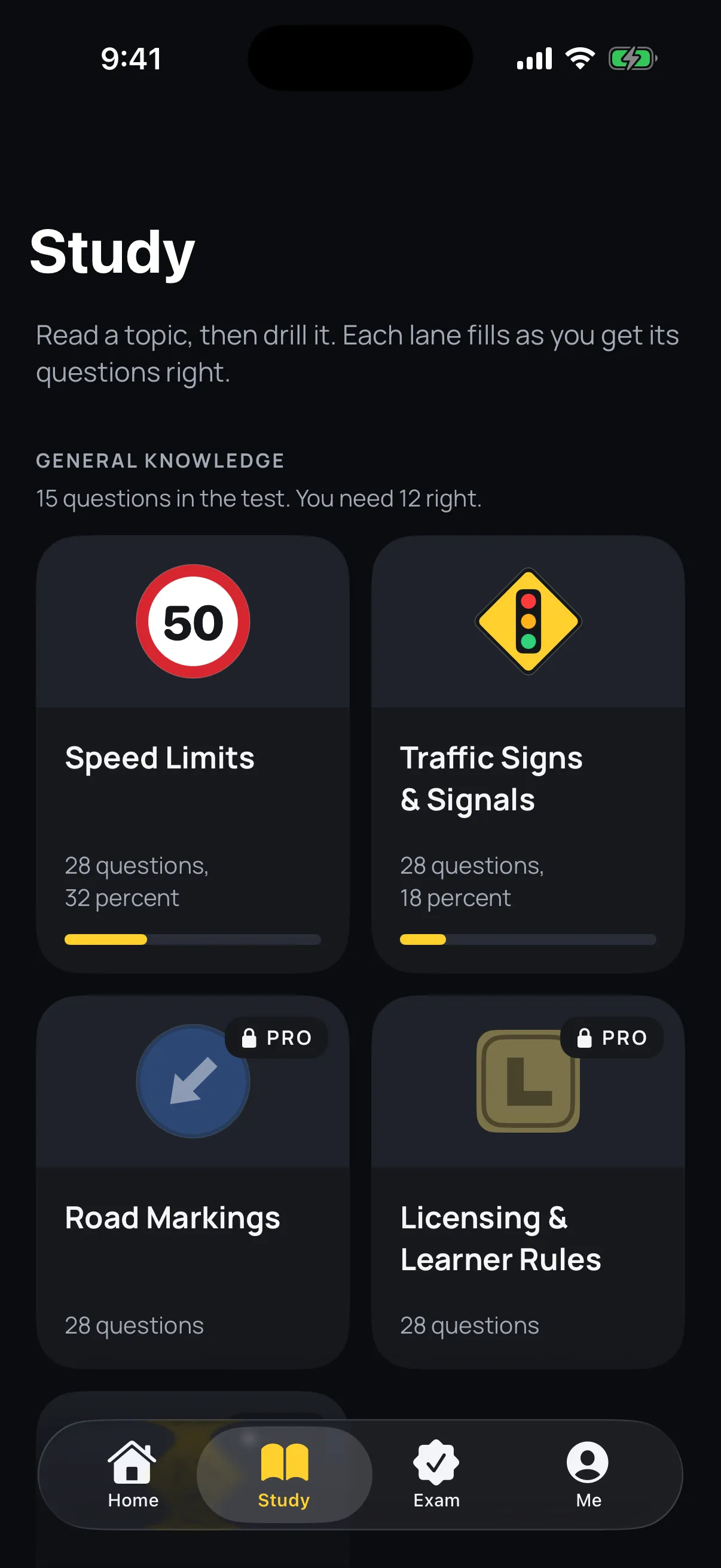
The NSW Learner Study tab with topic tiles, each with its drawn sign and a lane showing progress

Practise this topic in the app

Drill speed limits until it is automatic

In NSW Learner this topic has its own lesson and a drill of 69 questions. Questions you miss come back sooner, the lane on the tile fills as you get them right, and the mock exam mixes it in with everything else in the test's layout.

Common questions

Can a learner drive 100 km/h in NSW?
No. Learners are capped at 90 km/h on every road, including motorways signed 100 or 110 km/h.
What is the speed limit in NSW when there is no sign?
Built-up areas default to 50 km/h. Roads outside them default to 100 km/h.
Do school zones apply in the school holidays?
No. School zone limits only apply on school days, so school holidays, weekends and public holidays are excluded.
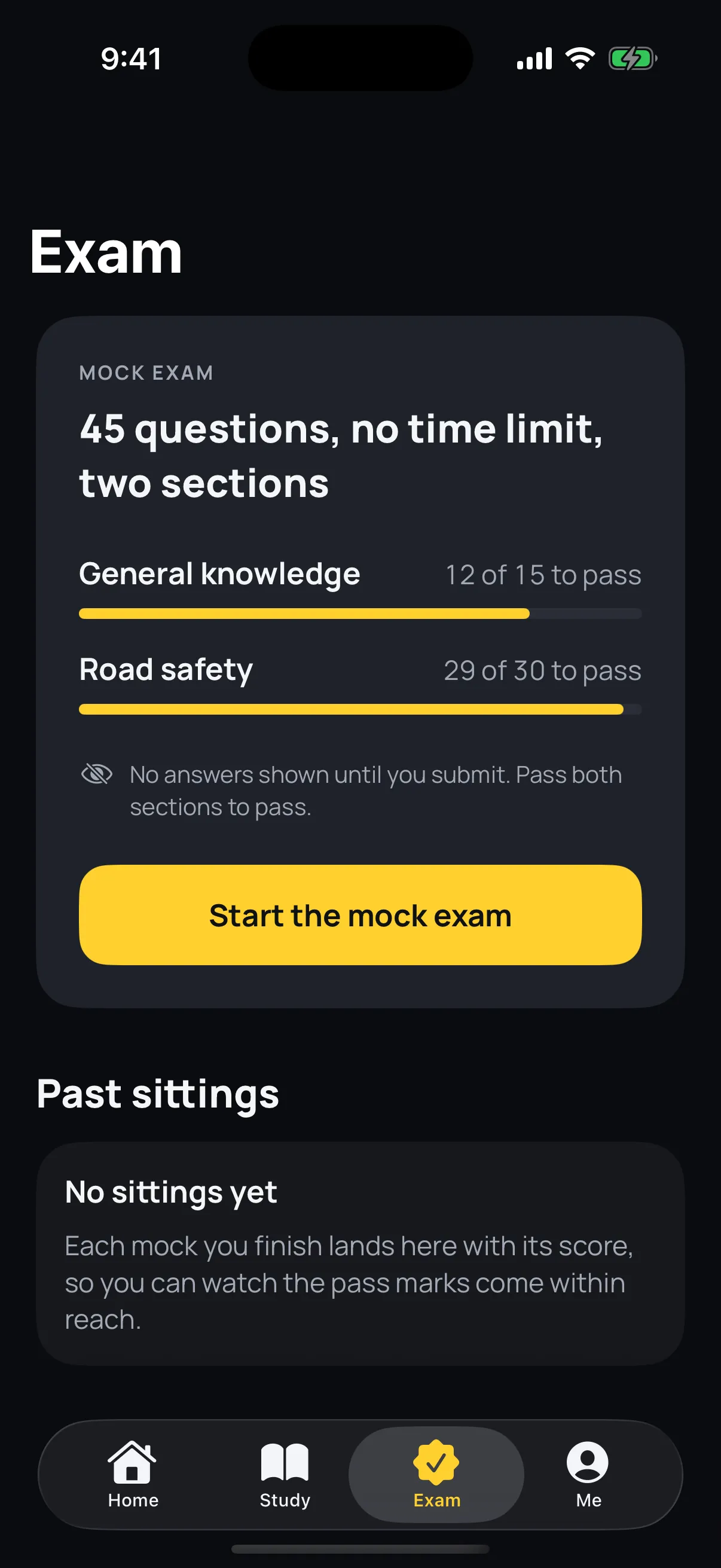
NSW Learner mock exam screen: 45 questions, no time limit, two sections with their pass marks
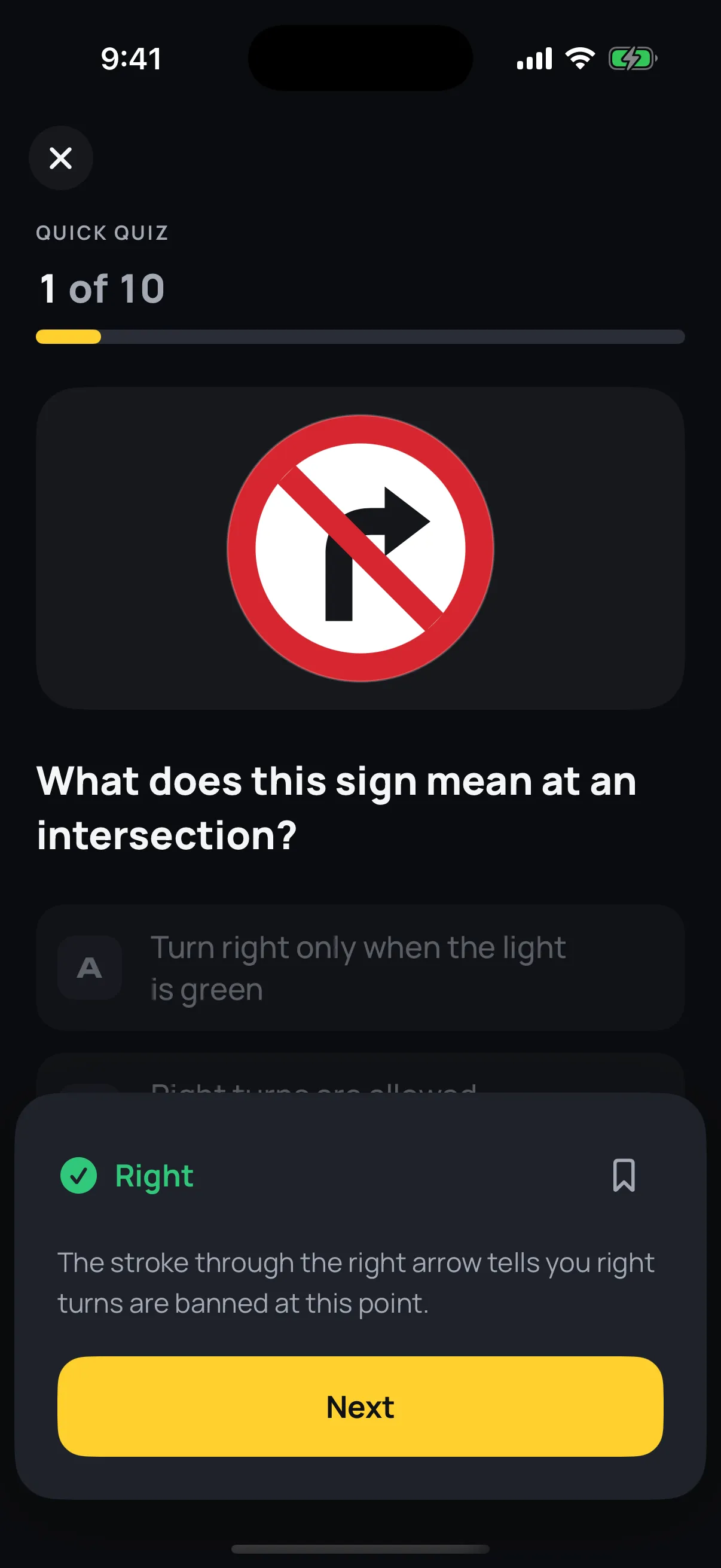
A practice question in NSW Learner answered correctly, with the explanation card
LP

Your L plate turns green when you would pass

NSW Learner is also an iPhone app, built on the same lessons and questions as this site. Short lessons for every topic, drills that bring back what you got wrong, and a mock exam in the test's layout, in your pocket and working without a signal.

  • Free in the app: one full mock exam, and the speed limits and traffic signs and signals topics with their lessons, drills and 179 questions
  • Private the app needs no account, works offline and keeps your progress on your phone
  • Pro comes two ways, each bought separately. NSW Learner Pro on this website is A$14.99 one-time and works in any browser you sign in on. The app has its own Pro, bought inside the app through Apple. One does not unlock the other.

Independent study app. Not affiliated with Transport for NSW or Service NSW.