NSW LearnerNSW DKT practice
Get NSW Learner free

Practise for the NSW driver knowledge test

Road Safety

Sharing the road with pedestrians, cyclists and riders

In the test. These are road safety items on the DKT, covering crossings, school zones and buses, passing gaps for bicycles, and how to treat people who need more time.

Quick answer

Do you have to stop at a pedestrian crossing in NSW?

Yes, if anyone is on the crossing. You must give way to a person on a pedestrian crossing, which in practice means stopping until they are past your car. Never overtake or pass a vehicle that has stopped at a crossing, because it may be hiding someone. With its flags displayed, a children's crossing means stopping and waiting until nobody at all is on it.

The short version

  • Give way to anyone on a pedestrian crossing
  • Never overtake a car stopped at a crossing
  • A school bus with rear lights flashing means 40 km/h as you pass
  • Bikes need 1 metre of room at 60 km/h or less, 1.5 metres beyond that
  • Check mirrors and blind spot for bikes before turning left or opening a door

Crossings and pedestrian lights

People on foot have priority in more spots than learners tend to expect.

  • Approach a pedestrian crossing slowly enough to stop before it if someone steps out.
  • Give way to anyone on a pedestrian crossing, and never pass a car stopped at one.
  • Wide white stripes painted across the road mark a pedestrian crossing, and people on foot there have right of way.
  • Children's crossing with flags out: stop for anyone on it or stepping on, and wait until it is empty. A crossing supervisor raising a STOP sign holds you there until the sign is lowered.
  • At mid block pedestrian lights, a red light holds you even when nobody has stepped out yet. Once it flashes yellow, move off only with the crossing clear.
  • Rain and poor light make people harder to see, and they tend to hurry, so ease off and look harder.

A stopped car in the next lane may be hiding someone on the crossing. Slow down and do not drive past it.
Turning, refuge islands and shared zones

Pedestrians keep their priority well away from the painted crossing too.

  • Turning at lights or anywhere else, let people crossing your new street finish first.
  • A flashing red walking figure tells people not to set off, but anyone already on the road may finish, and you still wait for them.
  • A person standing on a refuge island in the middle of the road may step into your lane, so be ready to slow or stop.
  • Someone using a motorised wheelchair is treated as a pedestrian and gets the same priority.
  • In a shared zone, give way to every pedestrian, including children playing.

Children, schools and buses

Children are small, quick and hard to see, so the rules give them extra protection.

  • On school days, the signed school zone hours mean 40 km/h.
  • A school bus with its rear warning lights flashing means children are getting on or off, so pass it at 40 km/h or less.
  • Flashing lights on the front of a school bus are a warning to oncoming drivers that children are getting on or off.
  • Expect a child to run out between parked cars or near buses, especially around parks and schools. Wherever people gather, such as at a bus stop, slow down and watch for anyone about to step out.
  • When passengers leave a bus on the other side, watch for people crossing from in front of or behind it.
  • Before reversing out of a driveway, walk around the car if you can, then reverse slowly while checking all around.

People who need more time

Some pedestrians move slowly or unpredictably, and patience keeps them safe.

  • Older people may still be crossing when your light turns green. Wait until they reach the footpath.
  • Your car may go unseen and unheard by an older person until it is quite near, so take it slowly and carefully around them.
  • An older person or a young child on a crossing gets extra time. Wait until they are fully across, even once your half of the road is clear.
  • A white cane or a guide dog tells you the person has low vision. Slow down and give them time.
  • Near pubs late at night, people affected by alcohol may cross without looking, and they are among the pedestrians hit most often.
  • On country roads with no footpath, pass people walking on the edge slowly and with plenty of room.
  • Use the horn only to warn of danger, never to hurry someone along.

Cyclists

Bike riders share most roads with you and have their own rights on them.

  • Bike riders carry the same rights and duties on the road as any driver.
  • Passing gap: at least 1 metre if the road's limit is 60 km/h or under, 1.5 metres where it is higher, counted from the right of the bike to the left of your car, mirrors and all.
  • Riders may travel side by side if they stay within 1.5 metres of each other, and they are allowed to take the full lane.
  • A bike may legally pass on your left unless you are signalling a left turn, so look in the left mirror and over your shoulder before turning.
  • Riders under 16 may use footpaths, so expect a bike as you cross one in a driveway.
  • A painted bicycle box ahead of the stop line is for riders waiting at the red, so keep every part of your car behind it.
  • Look behind before opening your door, so a rider does not hit it.

A rider in the centre of a narrow lane is allowed to be there. Wait until you can pass with the full gap.

Motorcyclists and horses

Riders on two wheels or four legs need care of their own.

  • Motorbikes are small and easy to lose behind a pillar or in a mirror blind spot, so look twice.
  • Fully licensed riders may filter between stopped vehicles at up to 30 km/h. Check your mirrors and hold your position.
  • Pass a horse slowly and widely, with no horn and no revving, because a sudden noise can make it bolt.

Try this

Worked examples to think through

Picture the situation, decide what you would do, then open the answer.

1Try this

Your light is green and you are turning left. The walk signal has started flashing red, and a woman is in the middle of the road you are turning into. What now?

Show the answer

Hold back until she reaches the other side. The flashing red only stops people from starting to cross, and anyone already crossing the road you enter still has priority over you (rule 62).

2Try this

You are on a road signed 70 km/h when the bike rider in front swings out to dodge broken glass. What gap do you need to pass?

Show the answer

1.5 metres or more, since the limit is above 60 km/h. If you cannot leave that much room safely, wait behind the rider until you can (rule 144-1).

Practise it

Three pedestrians and vulnerable road users questions to try

Real questions from the 75 in the NSW Learner bank for this topic, three options each like the test. Pick one to see the answer, the reason and the rule.

Question 1 of 3 Road Safety

People are walking across a pedestrian crossing in front of you. What must you do?

Right.Not quite. The answer is B.

Drivers must give way to anyone on a pedestrian crossing.

Source: Road Rules 2014 (NSW) rule 81

Question 2 of 3 Road Safety

At a children's crossing, the flags are out and a child is stepping onto the crossing. What must you do?

Right.Not quite. The answer is A.

You stop for anyone on or entering a children's crossing and wait until nobody is on it.

Source: Road Rules 2014 (NSW) rule 80

Question 3 of 3 Road Safety

How is the passing gap to a cyclist measured?

Right.Not quite. The answer is B.

The gap is the clear space between the closest parts, so mirrors and anything sticking out count.

Source: Road Rules 2014 (NSW) rule 144-1

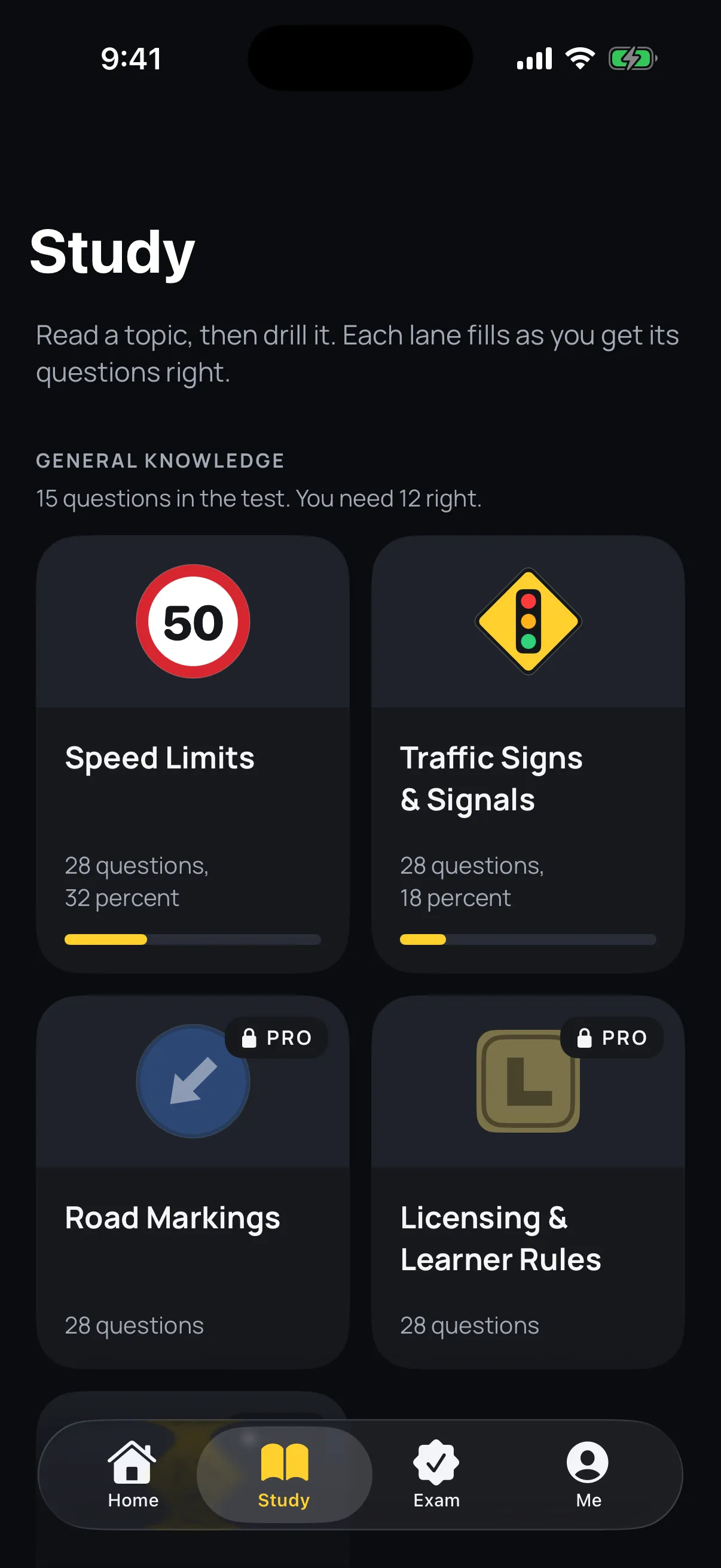
The NSW Learner Study tab with topic tiles, each with its drawn sign and a lane showing progress

Practise this topic in the app

Drill pedestrians and vulnerable road users until it is automatic

In NSW Learner this topic has its own lesson and a drill of 75 questions. Questions you miss come back sooner, the lane on the tile fills as you get them right, and the mock exam mixes it in with everything else in the test's layout.

Common questions

Can cyclists ride two abreast in NSW?
Yes, as long as they ride no more than 1.5 metres apart.
Is lane filtering legal in NSW?
Yes, for fully licensed motorcycle riders moving between stopped vehicles at up to 30 km/h.
How fast can you pass a school bus with flashing lights?
No more than 40 km/h while its rear warning lights are flashing.
Do you give way to pedestrians when turning left at lights?
Yes. Turning either way, even on a green, you let people crossing your new street finish first.
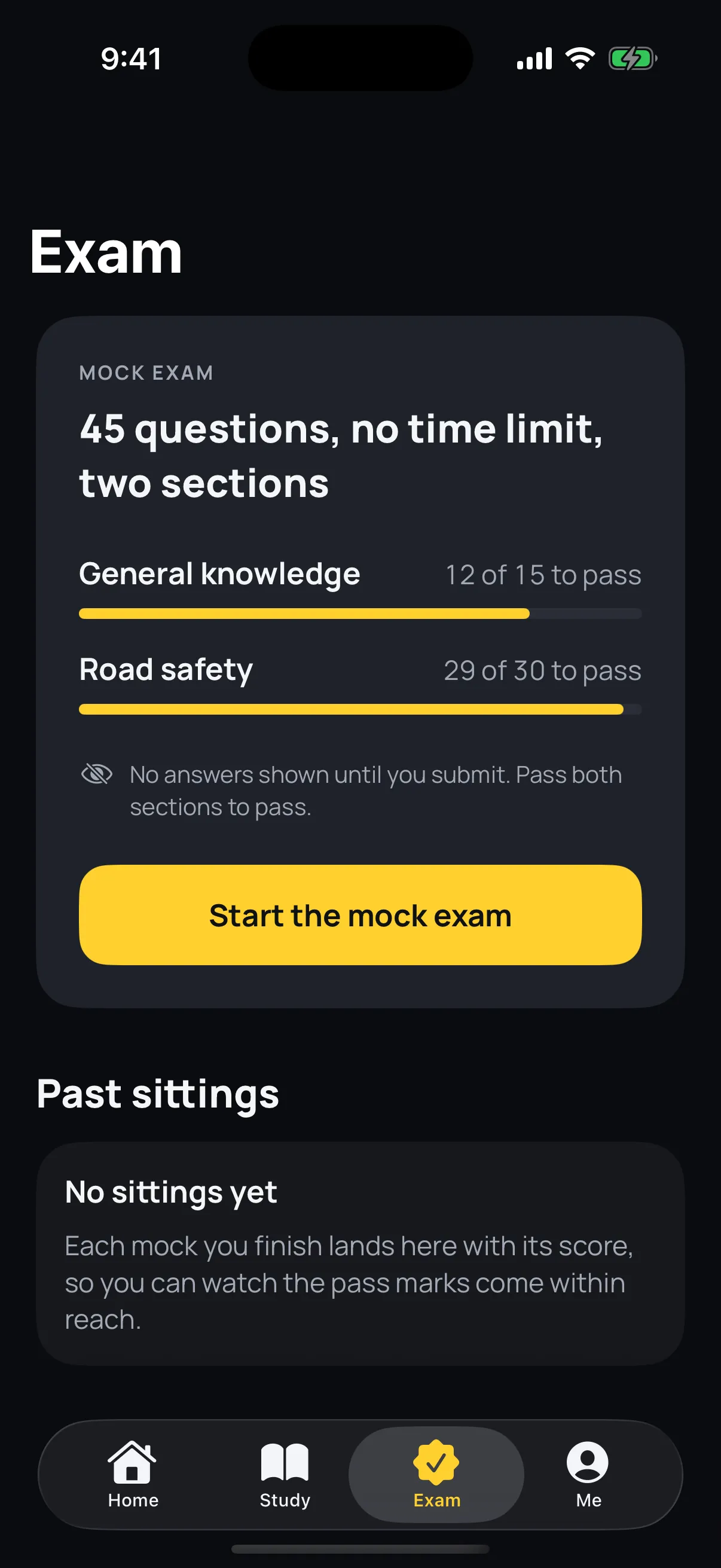
NSW Learner mock exam screen: 45 questions, no time limit, two sections with their pass marks
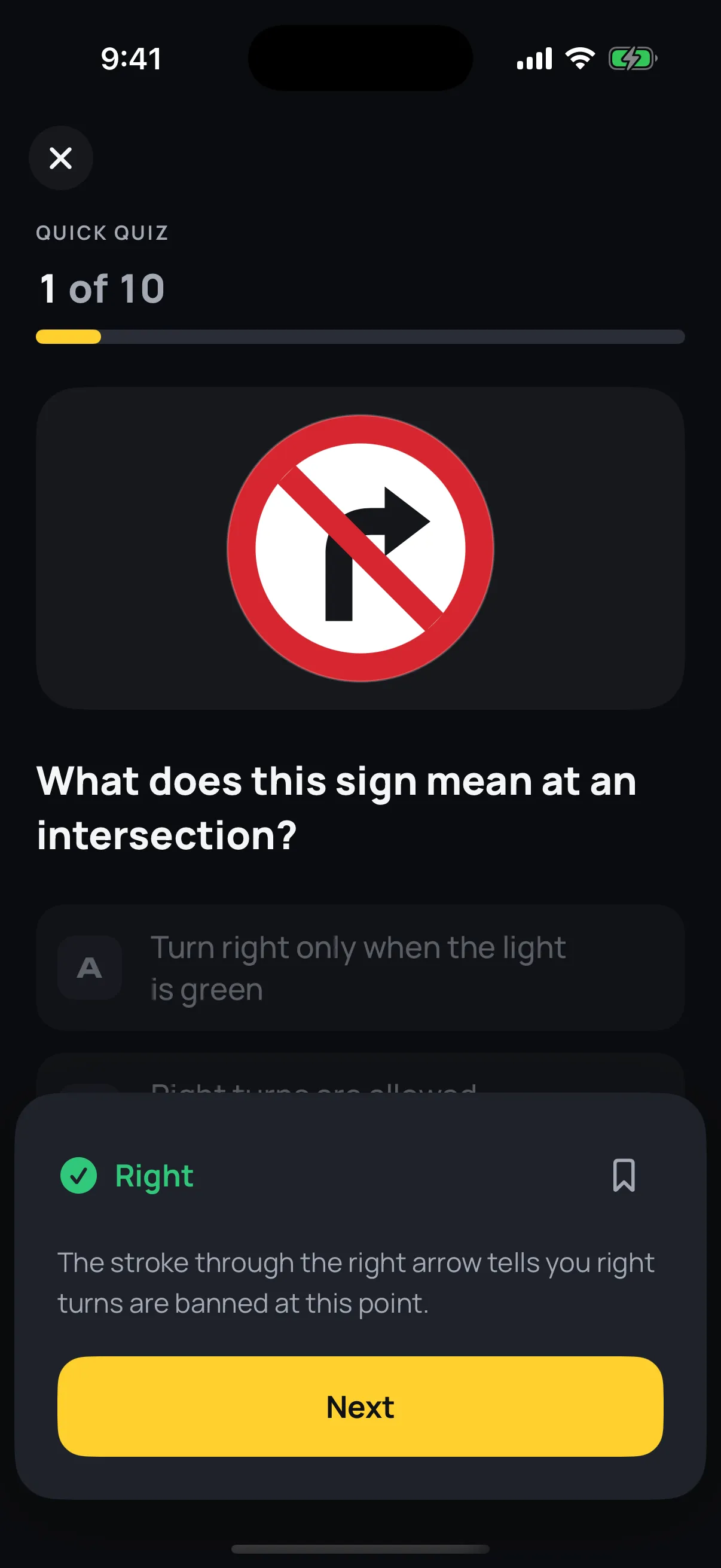
A practice question in NSW Learner answered correctly, with the explanation card
LP

Your L plate turns green when you would pass

NSW Learner is also an iPhone app, built on the same lessons and questions as this site. Short lessons for every topic, drills that bring back what you got wrong, and a mock exam in the test's layout, in your pocket and working without a signal.

  • Free in the app: one full mock exam, and the speed limits and traffic signs and signals topics with their lessons, drills and 179 questions
  • Private the app needs no account, works offline and keeps your progress on your phone
  • Pro comes two ways, each bought separately. NSW Learner Pro on this website is A$14.99 one-time and works in any browser you sign in on. The app has its own Pro, bought inside the app through Apple. One does not unlock the other.

Independent study app. Not affiliated with Transport for NSW or Service NSW.