NSW LearnerNSW DKT practice
Get NSW Learner free

Practise for the NSW driver knowledge test

General Knowledge

NSW intersection and roundabout rules

In the test. The DKT puts intersections and roundabouts in its general knowledge section. Many questions show a diagram and ask who goes first, which lane to pick, or what signal to give.

Quick answer

Who has right of way at a roundabout in NSW?

When you enter a NSW roundabout, you give way to every vehicle already in it, cyclists included. You travel clockwise, keeping the centre island on your right. Signal left on approach for a left turn, right for a right turn, and nothing for straight ahead, then signal left as you exit when practical. On a two-lane roundabout without arrows, left turns use the left lane, right turns the right lane, and straight ahead may use either.

The short version

  • At an unsigned crossroad, the car on your right goes first
  • On the road that ends at a T-intersection, you give way
  • A right turn waits for oncoming straight and left turning traffic
  • Enter a roundabout only after those already in it, and go clockwise
  • Signal left as you leave a roundabout when practical
  • Red lights flashing at a level crossing mean stay put

Intersections without signs or lights

When nothing controls an intersection, a few fixed rules settle the order.

  • At a crossroad, give way to vehicles on your right.
  • At a T-intersection, if your road stops at the junction, every vehicle on the continuing road goes first, from both sides.
  • On the through road of a T-intersection, turning right into the side road, you still wait for oncoming traffic.
  • Turning right, wait for oncoming vehicles going straight or turning left.
  • Left turners beat oncoming right turners heading into the same street.
  • Turning either way, let pedestrians crossing the street you are entering finish.
  • You and an oncoming car both turning right: each of you passes in front of the other.

A car arriving from your left at an unsigned crossroad has you on its right, so it waits for you.
Signs and traffic lights at intersections

Signs and signals change who goes first, but they never remove the need to look.

  • Stop sign: a full stop, then give way to everyone you would cross or join.
  • Pulled up short of a stop line to let someone cross? Once they are over, you stop a second time at the line itself.
  • Give way sign: slow, and stop only when there is someone to let through.
  • Green circle: you may turn, after oncoming traffic and crossing pedestrians are clear.
  • Already in the intersection when the light goes red: finish the turn as soon as it is safe.
  • No U-turn at traffic lights unless a U-turn permitted sign is up. Wherever you U-turn, all vehicles and pedestrians go first.
  • A HOOK TURN ONLY sign means turning right from the far left side: pull forward, wait, and finish once the lights on the street you are turning into go green.

Lane position and signalling for turns

Being in the right spot early makes the turn predictable for everyone around you.

  • With several lanes, left turns come from the left lane and right turns from the right lane, unless arrows open up others.
  • With one lane each way, position your car just left of the centre line before you turn right.
  • On a one-way road, a right turn begins from the far right side.
  • Switch your indicator on early enough to give other road users clear warning, and do it for every turn: from a lane with a turn arrow, from one of a pair of turn only lanes, even when the street is deserted.
  • Two right turn lanes? Choose by what comes next. The left one of the pair ends on the left side of the new road, handy for a left turn soon after, and the right one ends on the right.
  • Follow lane arrows wherever they are painted, including inside roundabouts.

Roundabout rules

Roundabouts keep traffic flowing, but only when everyone follows the same pattern.

  • Give way to all vehicles already in the roundabout, cyclists included.
  • Travel clockwise, with the centre island on your right.
  • Left turn: signal left on approach and keep it on as you leave.
  • Straight ahead: no signal on approach, then left before you exit if practical.
  • Right turn: signal right on approach, then left before your exit if practical.
  • Two lanes and no arrows: left from the left lane, right from the right lane, straight from either. To change lanes inside, signal and wait for a gap.
  • Inside a two-lane roundabout, keep to the lane you entered: a left turn goes in and out on the left, straight ahead leaves from your entry lane, and going right round uses the right lane signalled as a right turn. Expect cars beside or ahead of you to cut across your path to exit.

The exit signal is the one learners forget. Signalling left as you leave tells drivers waiting to enter that you are getting out.

Railway level crossings

Trains cannot swerve or pull up quickly, so crossings carry some of the strictest rules on the road.

  • At a stop sign on a crossing, stop and look both ways for trains every time.
  • Flashing red lights mean a train is coming. Stay stopped until they go off, even if no train is in sight.
  • Gates lifting while the lights still flash can mean a second train, so keep waiting.
  • Only drive onto the tracks when there is room to clear them completely on the far side.

Try this

Worked examples to think through

Picture the situation, decide what you would do, then open the answer.

1Try this

At a crossroad with no signs or signals, you are waiting to turn right. One car is coming straight at you from the opposite side and another sits on your right, waiting to go across. What order do you go in?

Show the answer

You go last. The oncoming car goes first because your turn crosses its path, and the car on your right has priority under the give way to the right rule (rule 72).

2Try this

You are heading for the right-hand exit of a two-lane roundabout that has no lane arrows. Which lane do you take, and what do you signal?

Show the answer

Come in from the right lane with your right indicator on, keep to that lane all the way round, then switch to a left signal just before you leave, if practical (rules 111 and 113).

Practise it

Three intersections and roundabouts questions to try

Real questions from the 83 in the NSW Learner bank for this topic, three options each like the test. Pick one to see the answer, the reason and the rule.

Question 1 of 3 General Knowledge

You reach a crossroad with no signs or lights, and a car is approaching from your right. Who goes first?

Right.Not quite. The answer is B.

At an intersection with no signs, signals or roundabout, you give way to vehicles coming from your right.

Source: Road Rules 2014 (NSW) rule 72

Question 2 of 3 General Knowledge

You are about to leave a roundabout. What signal should you give?

Right.Not quite. The answer is A.

Signalling left as you exit tells drivers waiting to enter that you are leaving.

Source: Road Rules 2014 (NSW) rule 118

Question 3 of 3 General Knowledge

At an intersection with a HOOK TURN ONLY sign, how must a right turn be made?

Right.Not quite. The answer is A.

A hook turn sign means right turns are made from the left side in two stages, which keeps tram or centre lanes clear.

Source: Road Rules 2014 (NSW) rule 34

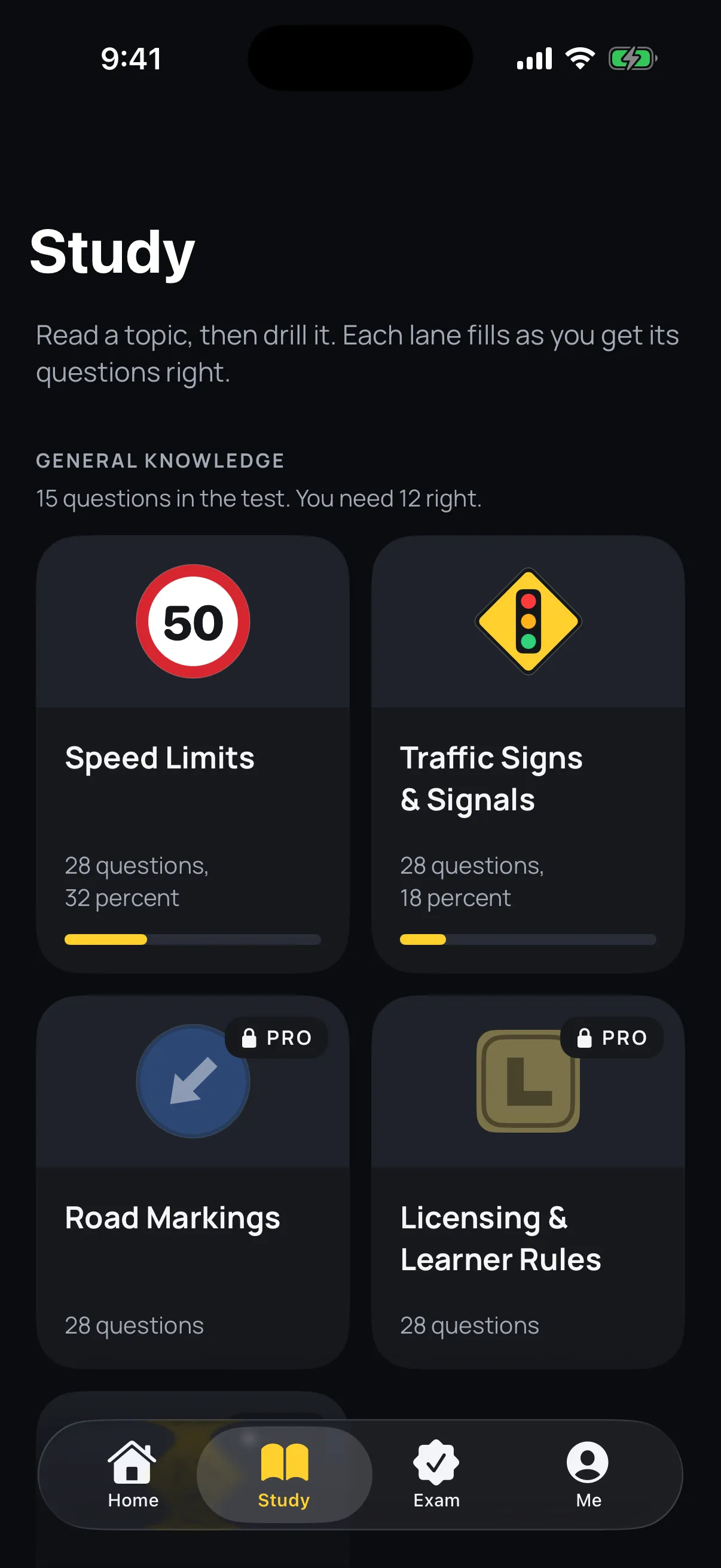
The NSW Learner Study tab with topic tiles, each with its drawn sign and a lane showing progress

Practise this topic in the app

Drill intersections and roundabouts until it is automatic

In NSW Learner this topic has its own lesson and a drill of 83 questions. Questions you miss come back sooner, the lane on the tile fills as you get them right, and the mock exam mixes it in with everything else in the test's layout.

Common questions

Do you give way to the right in NSW?
Yes, at an intersection with no signs, lights or roundabout, you give way to vehicles approaching from your right.
Do you indicate when going straight through a roundabout in NSW?
Not on approach. Signal left just before you exit if it is practical.
Can you do a U-turn at traffic lights in NSW?
Only where a U-turn permitted sign is displayed. Otherwise U-turns at traffic lights are banned.
Which lane do I use to go straight at a two-lane roundabout?
Either lane, unless arrows or markings show otherwise.
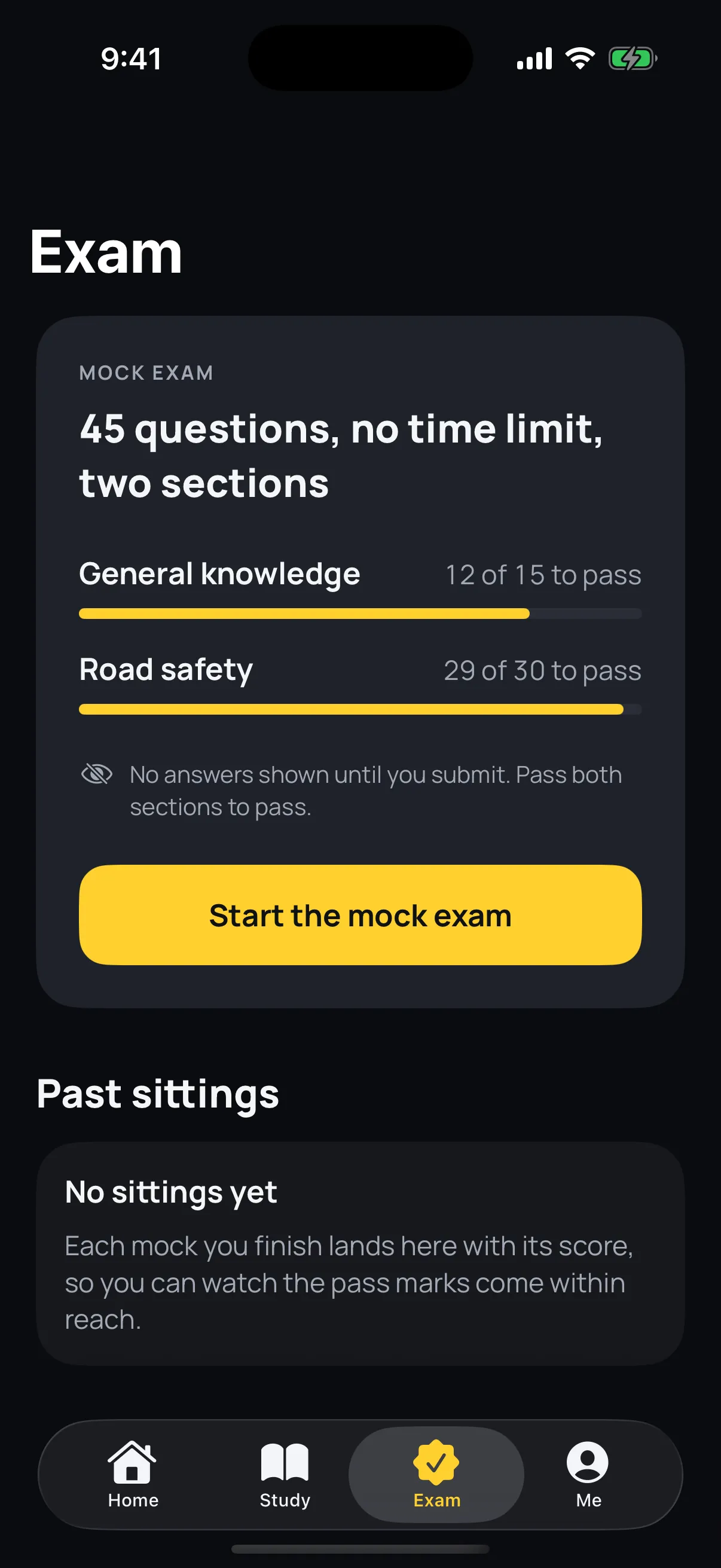
NSW Learner mock exam screen: 45 questions, no time limit, two sections with their pass marks
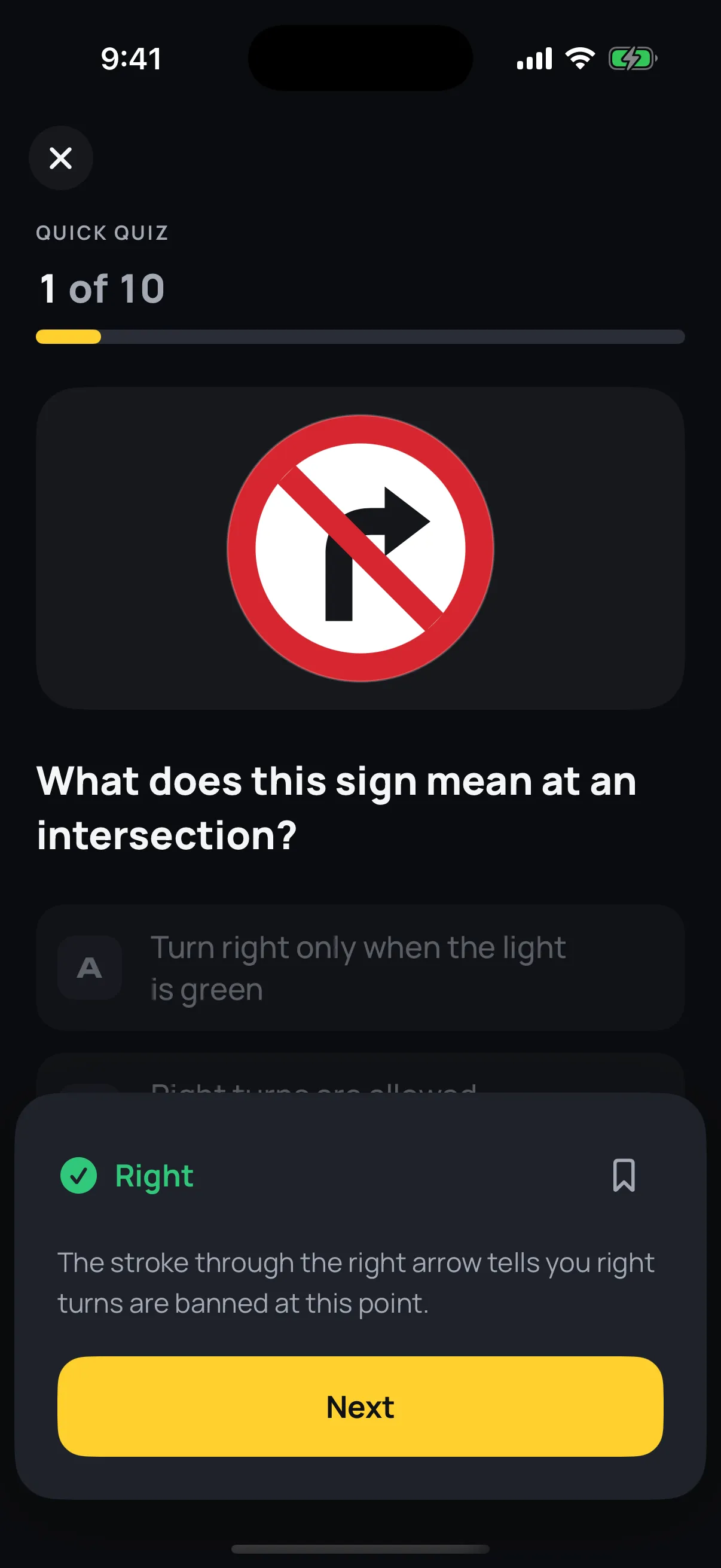
A practice question in NSW Learner answered correctly, with the explanation card
LP

Your L plate turns green when you would pass

NSW Learner is also an iPhone app, built on the same lessons and questions as this site. Short lessons for every topic, drills that bring back what you got wrong, and a mock exam in the test's layout, in your pocket and working without a signal.

  • Free in the app: one full mock exam, and the speed limits and traffic signs and signals topics with their lessons, drills and 179 questions
  • Private the app needs no account, works offline and keeps your progress on your phone
  • Pro comes two ways, each bought separately. NSW Learner Pro on this website is A$14.99 one-time and works in any browser you sign in on. The app has its own Pro, bought inside the app through Apple. One does not unlock the other.

Independent study app. Not affiliated with Transport for NSW or Service NSW.